
Every Dota 2 player has a number they think they deserve. The ranked system has its own opinion, and the gap between the two explains most of the frustration in the queue. Here is how ranked works today, what actually moves your rating, and why so many players spend a year in the same medal.
Medals sit on top of a number
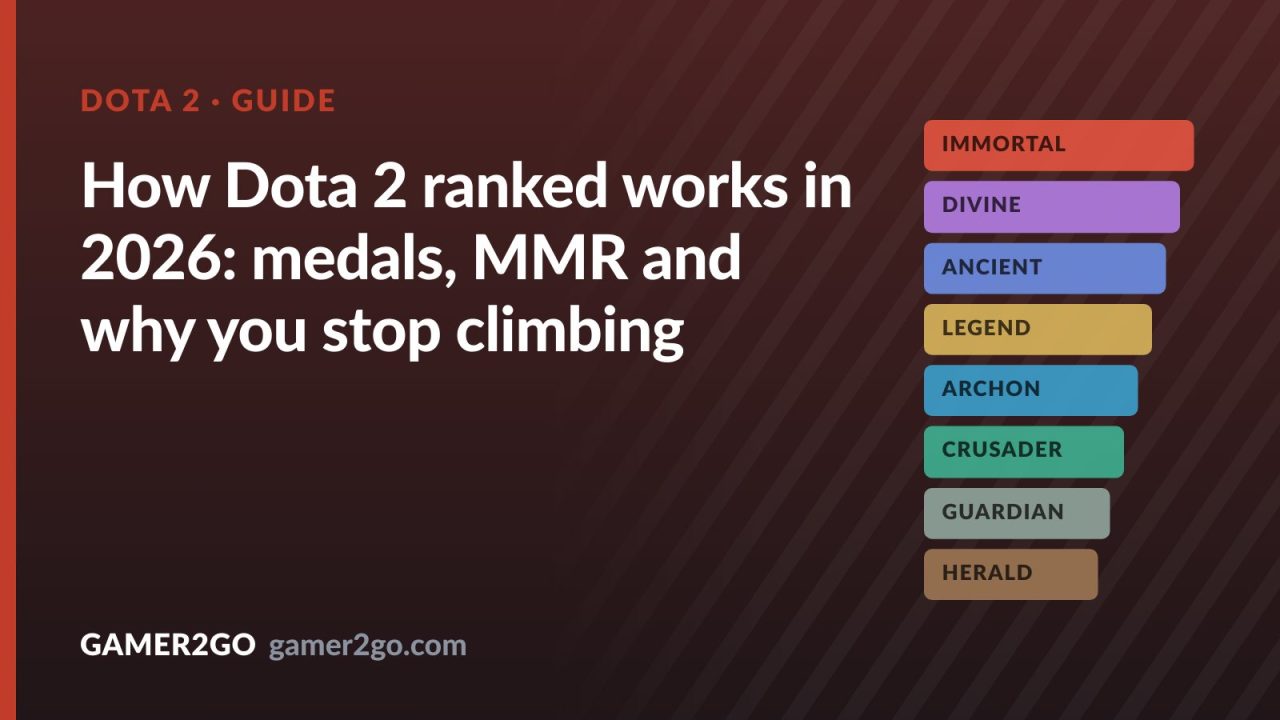
Your medal is a label for your matchmaking rating, or MMR. There are seven medals with five stars each: Herald, Guardian, Crusader, Archon, Legend, Ancient and Divine. Above them is Immortal, where the medal gives way to a place on your region’s leaderboard. Up to Ancient 5, one star covers about 154 MMR, so a full medal is roughly 770 points. In Divine the stars are 200 points wide, and Immortal starts at about 5,620.
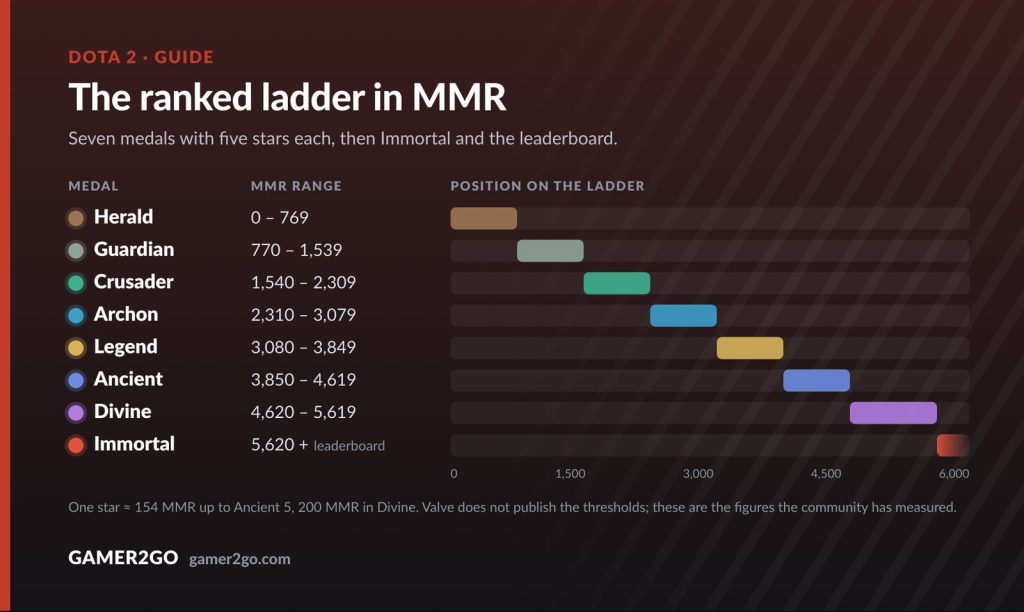
The thresholds shape how progress feels. Legend begins around 3,080, Ancient around 3,850, Divine around 4,620. A player on 3,000 is three or four net wins away from a new medal; a player on 3,700 can gain a hundred points and see nothing change for weeks.
What one game is worth
Once your rank has settled, a ranked win or loss moves you by roughly 25 to 30 MMR. The figure varies from game to game because the system also tracks how sure it is about your rating. Right after calibration it is unsure, so the swings are larger; as your results become predictable, they shrink.
Calibration and recalibration
A fresh account has to unlock ranked first: Valve wants a phone number attached and a minimum amount of playtime. The first ranked games then place you, and they carry more weight than anything you play afterwards. Recalibration works the same way for an existing account. The system lowers its confidence, and a run of wins or losses moves you much further than usual. That is the one stretch where a few extra wins make a visible difference.
Behavior score and low priority
Next to MMR sits a number most players ignore until it hurts: behavior score, which runs up to 12,000. Reports, abandons and abuse in chat push it down, and a low score means worse games, chat restrictions and eventually limits on ranked itself. Abandon matches or collect enough reports and you land in low priority, where you play Single Draft against people in the same position and have to win your way back out.
Why players stop climbing
The short answer is arithmetic. At 25 MMR a game, a 50% win rate keeps you exactly where you are, however much you play. A 52% win rate, which already means you are better than your bracket, earns about one point per game, so climbing 1,000 MMR takes around 1,000 matches. At 55% it is 400 matches. At 60% it is 200.
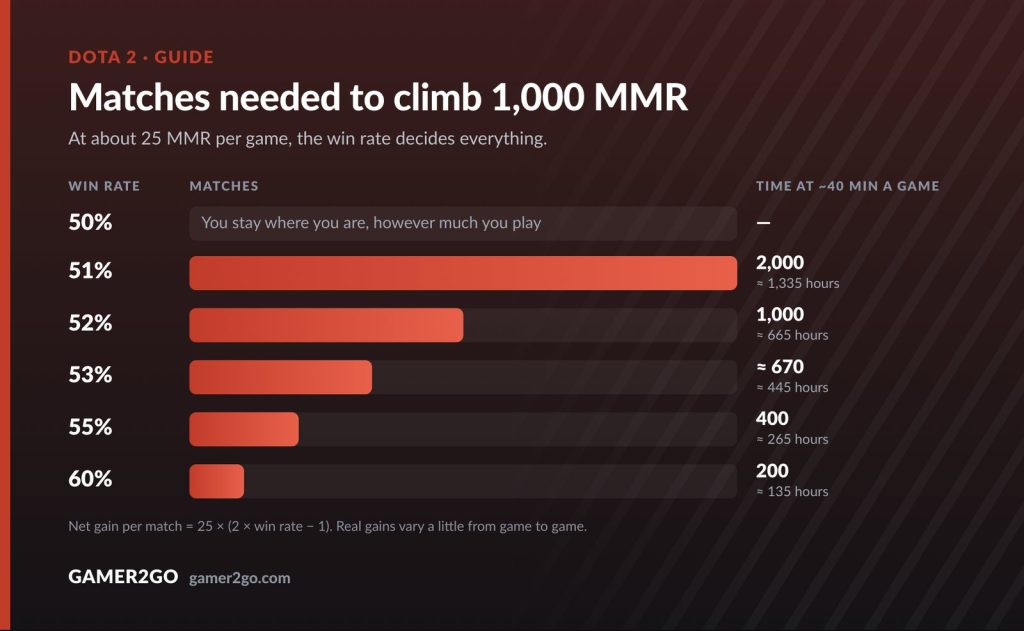
An average game lasts around 40 minutes, so 400 matches is more than 250 hours. Few people have that to spare, and most settle into a band where they win about half their games, which is exactly what matchmaking is built to produce. The way out is a higher win rate, not more games: a smaller hero pool, one role, watching your own losses back, and stopping after two defeats in a row.
An honest word on boosting
Paid boosting exists because of that arithmetic, and it comes in two forms with very different risks. In a duo boost, a high-MMR player queues with you on your own account. You keep your login and play every game yourself, much as you would with a stronger friend. In an account boost, somebody else logs in and plays for you. That is faster, but Steam’s Subscriber Agreement does not allow you to share your account, and Valve has run ban waves against smurf accounts. No service can honestly call account play risk-free, whatever its landing page says.
If you go ahead, ask the questions you would ask of anyone who touches your account. Can you play alongside the booster instead of handing over the login? Can you watch the games? Is there a refund before work starts, and somewhere to follow progress?
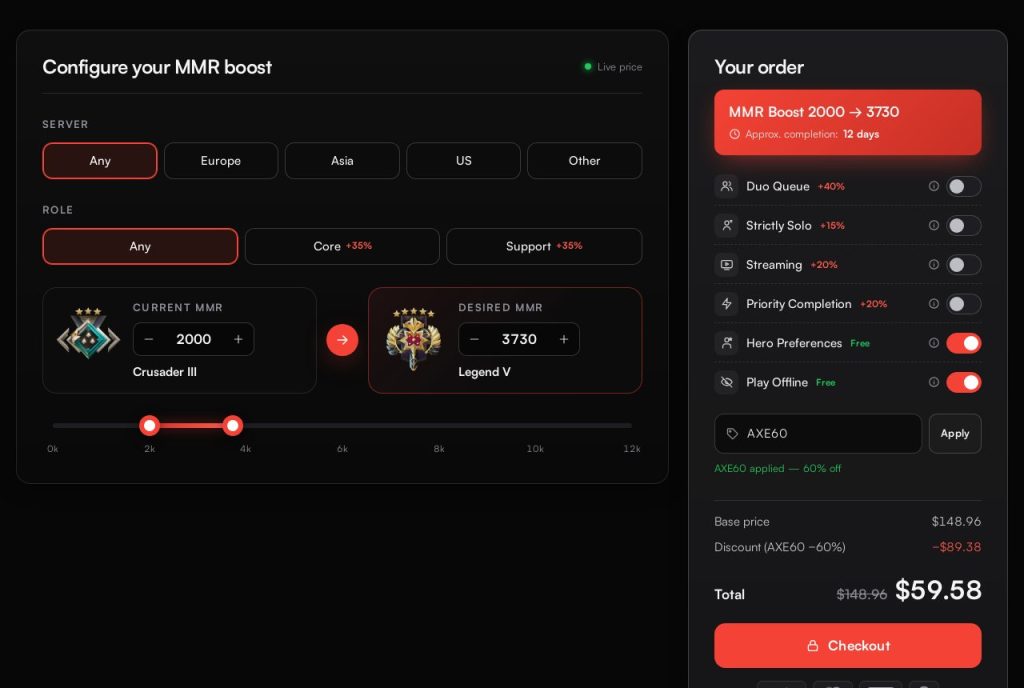
Dota2Boosting.com shows what those options look like in practice. Its configurator takes your current and target MMR, server and role, and lets you switch on a duo MMR boost, where the booster queues with you on your own account, or streaming, so that you can watch the games live or as a recording. Hero preferences and an offline mode are on the same form, every order gets a private page for tracking progress, and the checkout promises a full refund before the boost starts. The site also covers calibration, low priority and behavior score, and offers one-on-one coaching, which is the option worth trying first if the goal is to climb and then stay there.
Whatever you choose, a rank only means something if you can hold it. For news from the pro scene and every patch, follow our Dota 2 coverage.

Join the discussion