
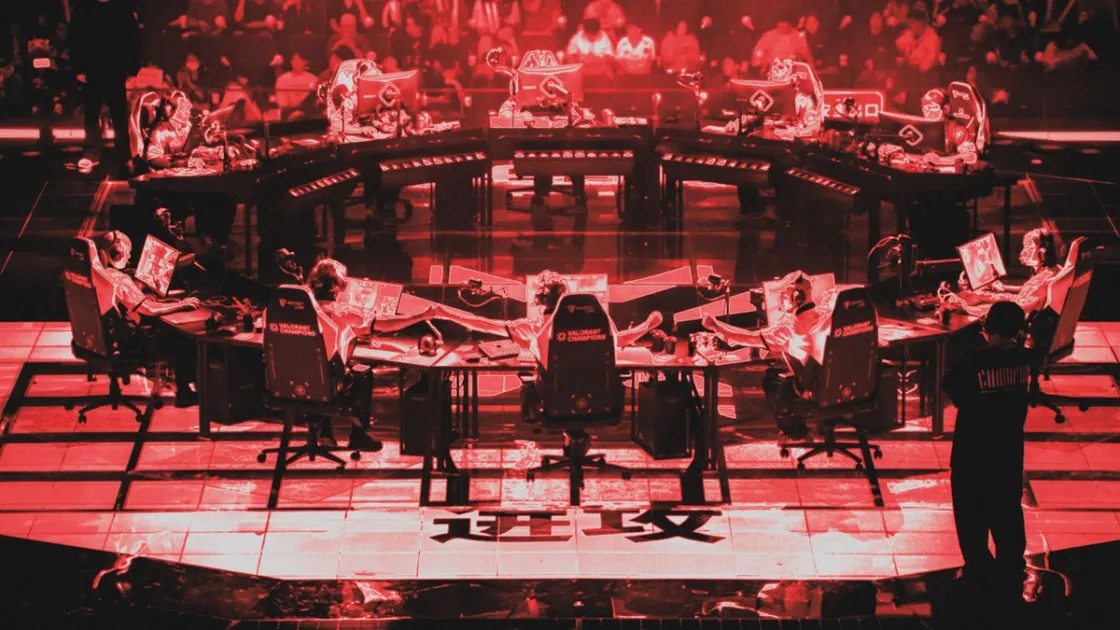
Riot Games has laid out a broad competitive-integrity plan for the 2027 VALORANT Champions Tour, saying the circuit is entering “a new era of competition” as more teams, more qualifying routes and the return of online play open the door to a larger field. In an official announcement published on November 5, the developer said the approach will combine stronger anti-cheat measures, added player verification, clearer enforcement and new rules for livestreams, coach communication and technical disputes.
The company said the changes are aimed at Open Qualifiers, where “hundreds of teams” can compete at once across interconnected brackets. Riot framed the policy as a way to protect matches before problems occur, rather than relying only on punishments after the fact.
Open Qualifier access comes with stricter eligibility rules
Riot said all competitors in Open Qualifiers will need to be Vanguard Check compliant and meet Ascendant or higher rank requirements. The company also set account-standing standards for eligibility. Players with accounts in good standing may compete, but Riot said those accounts can still be reviewed. An account in good standing is one that is not currently banned, has not received a Game Ban, Vanguard Intervention, Ranked Restriction or Comms Restriction within the last 30 days, and is not subject to a Ranked queue restriction during the enrollment or competition period.
The announcement also said Riot’s anti-cheat team is working on “additional security at the online layer,” alongside stricter hardware and software requirements, clearer account eligibility standards and extra monitoring as teams advance through the tournament. Riot said reports of suspected cheating will be handled through official channels rather than community speculation, with investigations drawing on Vanguard detection, account reviews, match evidence and tournament investigations. Where available, officials may also review gameplay recordings, communications and other evidence.
Confirmed violations will bring sanctions that can include disqualification and competitive suspensions, with tournament officials deciding the outcome based on the violation, evidence and the applicable rules.
Riot says integrity checks will scale with the bracket
The developer said the system will not be identical across every stage of Open Qualifiers. Early rounds will lean more heavily on automated anti-cheat tools, standard rules and post-match reporting, while later stages will add more monitoring, verification and direct referee oversight. Riot described the goal as a framework that can support “hundreds of teams competing simultaneously” without lowering standards in the matches that matter most later in the bracket.
Officials will also have the ability to step in with extra verification during a match. Riot said that can include reviewing player setups, requesting recordings, requiring teams to live stream their match area, or checking communications where the rules allow. The company said regional tournament operators will be expected to make decisions that are fair, timely and transparent while avoiding unnecessary disruption to the wider bracket.
The online format also changes how coach communication is handled. Riot said coaches may communicate with players in the early stages of competition, but in later stages of Cup qualification tournaments, communication will be monitored and follow the same rules used in the current VCT.
Player streams will be allowed, but delayed
Riot said it wants to encourage community coverage of Open Qualifiers while limiting the competitive risks that come with live online broadcasts. Player POV livestreams will be allowed, but they must have a broadcast delay of at least two minutes starting with Open Qualifiers. Teams can also organize their own broadcasts using multiple player POV streams, as long as each stream follows the same delay requirement.
Third-party creators will be able to watch party player POV streams, but Riot said they need approval from the tournament operator before co-streaming. Teams and players may publish match VODs and voice communications, which Riot said it will support. The company also noted that livestreaming can create risks such as stream sniping and giving teams access to information they would not otherwise have during a match.
“Livestreaming introduces risks, including stream sniping and the potential for teams to gain access to information outside the game.”
“Players will be required to be Ascendant+ to compete in Open Qualifiers.”
“Confirmed competitive integrity violations will result in sanctions, including disqualification and competitive suspensions.”
Riot’s announcement arrives as the broader 2027 VALORANT season continues to take shape. On GAMER2GO, recent roster stories have already shown how organizations are preparing for the next cycle, including Sentinels’ 2027 rebuild and Barça eSports’ new lineup. Riot’s new rule set suggests that the pathway into that season will be guarded more tightly once Open Qualifiers begin.
Online disputes, disconnects and match-fixing rules
Riot also addressed the technical realities of online competition, saying players are responsible for keeping their own setups stable and suitable for play. Events will have defined technical-pause allowances and procedures for disconnections in the Online Play Rulebook. Depending on the circumstances and rules in force, matches may be paused, resumed or required to continue.
The same applies to crashes and equipment failures. Riot said issues should be reported immediately through official tournament channels, and that officials will follow established procedures for pauses and match continuation. For ping and server selection, the company said online play cannot guarantee identical latency for every competitor, so tournament operators will use server-selection procedures meant to provide reasonable competitive conditions based on player locations and available servers.
Riot also said it will not pause an entire Open Qualifier while one dispute is resolved, pointing to the number of simultaneous matches and interconnected brackets. Instead, officials will be expected to resolve issues quickly while preserving the broader event.
Beyond cheating, the announcement broadened the integrity remit to cover betting-related misconduct, match-fixing, conflicts of interest and other behavior that can distort results. Riot said manipulation of competitive outcomes is strictly prohibited, and that teams may be sanctioned for the actions of owners, players, coaches and other employees or members of the organization. The policy also states that attempts to manipulate a match, even if unsuccessful, count as violations, and that failure to cooperate in an investigation can bring penalties similar to the original offense.
Riot said it will aim to communicate meaningful rulings transparently, but not every investigation will lead to a public statement. It added that not every allegation will be substantiated, and that investigations will be handled through official channels rather than public speculation. The announcement ended mid-sentence in its final section, which begins to outline how players and teams can report issues.


ascendant+ only is brutal
yeah, but at least it matches the whole “protect the bracket early” thing. ascendant+ plus no recent bans is way less random than just trusting vibes.
two minute delay is fine
does anyone know how strict this will feel in practice? i get the ascendant+ rule and the 30 day standing check, but for online open qual it sounds like a lot of people could get filtered out before even playing. also curious if the two minute delay means solo pov only or if team multistream setups are actually workable.
if you have one player on stream and the rest off, it should be ok i think. the bigger issue is setup checks mid match, that can slow everything if refs are doing it often.
the later-stage coach comms rule is where the real edge will be
we already saw in pro play how much info a coach can clean up. if riot keeps that tighter in later rounds, fewer teams get free midround babysitting.
or more pauses, same mess
stream sniping fiesta lol
with 2 min delay, less fiesta
the delay helps, but it does not remove the problem entirely. if teams can run their own multi pov broadcasts, somebody will always try to peek at timing or callouts, even with a two minute buffer. Riot is basically choosing the least bad option here, which is fair for a huge online bracket, but it will not be spotless.
still enough for chaos
“open qualifiers” but only if you pass the riot background check first. next theyll ask for a utility bill and your first born
probably still faster than sitting in a 9 round remake lobby
and a cheek swab
dont give them ideas
Ascendant+ is too high for open quals
nah, it keeps smurfs out
sure, but it also cuts a lot of real grinders out. i get the smurf problem, just feels like they picked the easiest wall to build.
official reports only is the right call
only if riot actually acts fast. otherwise it just becomes a neat form and then nothing happens until after the bracket is cooked.
fair, but community witch hunts are worse. at least with official review they can use vanguard and match evidence instead of random clips.
you trust vanguard more than clips, wow
i trust it more than a lobby full of people screaming hacker because they lost pistol. if riot says they can pull recordings, comms and account history, that is better than forum detective work. not perfect, but better than turning every upset match into a witch hunt thread.
does anyone think the account standing rule will stop more cheaters, or just punish normal players with old comms warnings?
mostly the second one
lol you really think a ranked mute from last month matters that much? or are you just assuming riot loves paperwork more than cheaters
i’m saying i’ve seen legit players locked out of stuff for tiny support tickets while obvious throwers kept queueing. in a pro qualifier system, that kind of old baggage rules can catch the wrong people fast.
yeah, that part is what worries me too. i get the idea, but if the rule nets more clean lobbies and also blocks a few normal players, riot will call that a win and move on