

Roblox said it is using AI across engineering and security work, pairing agentic systems and large language model tools with sandboxing, monitoring and human review as the company handles a platform it says serves 138 million daily active users.
In a newsroom post by Chief Information Security Officer Nicole Grinstead and Vice President of Engineering Behnam Rezaei, Roblox described AI as leverage for its builders. The company said the tools help engineers spend less time on repetitive work and more time on architecture, judgment and the harder parts of the roadmap. It said that approach is already showing up in pull request review, threat research, detection work and internal support for engineers.
AI tools are now part of Roblox’s build process
Roblox said engineers use agentic systems and LLM-based pull request suggestions to harden systems at scale. It also said it built an AI coding assistant trained on its own code, and that the tool nearly doubled the rate at which engineers accept its suggestions. Roblox said that lets teams move attention away from routine bug hunting and toward higher-impact design choices.
The company framed the tools as a way to remove busy work without removing people from the process. Principal Infrastructure Security Engineer Charles Zaffery said, “I think there was a period of time when I was really scared… this thing’s coming, it’s going to replace all our work. And now I don’t feel that at all.”
Roblox said it wants those tools available broadly, not just to a small group, so engineers can find new uses for them. Gungor Polatkan, Senior Director of Engineering for Discovery, said internal AI tools let engineers ask questions and understand existing products “much, much faster.” Senior Software Engineer Sean Scarnecchia said that speed changes what teams are willing to attempt, including “the bigger bets [and] some of the harder parts of our roadmap with a little bit less hesitation.”
The same security team that sandboxed the coding agents has also built multiagent pipelines that research threats, find gaps in detections and write, challenge and validate new detection rules. Roblox said it also runs an autonomous threat-hunting system against live security data.
Roblox says testing comes before trust
Roblox devoted much of the post to how it rolls out AI tools. Before greenlighting them internally, the company said it built a sandboxed environment to test them. Its model is simple: test, build controls, then trust and monitor.
The need for that process showed up during internal testing. Roblox said a hidden instruction in a GitHub issue convinced an AI coding agent to try uploading credentials to a public repository. Traditional security tools did not see anything unusual, according to the company, and the incident happened inside the sandboxed test environment Roblox had built for exactly that reason. The company said its security team later shared the full story at Black Hat 2026.
Roblox said that kind of test is important because every AI integration is measured against trust and reliability. The company said human judgment outranks any model recommendation, and that AI should take on mechanical work while people handle the nuanced decisions software cannot make. Avni Yagnik, manager of Detection and Response, said compassion is central to how the team works.
The post also says Roblox does not overconsume or overexpose data, and that its security teams treat engineers as customers while trying to make the secure option the easiest one to choose. Across thousands of microservices, Roblox said it built one central system that manages and rotates secrets automatically, so no engineer has to remember to refresh a credential by hand.
Scale is shaping the rollout
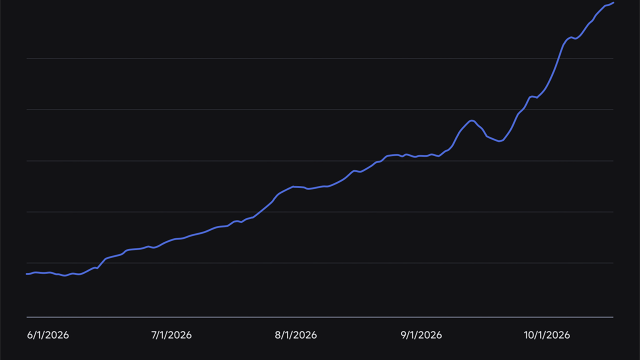
Roblox tied its AI rollout to the size of its platform and the amount of code it runs from outside creators. The company said it serves 138 million daily active users as of Q3 2026, and that it moves more than 18 trillion messages a day through a single internal platform at 99.995% availability. It also said its infrastructure spans owned data centers and cloud instances that spin up and disappear in seconds.
That scale extends beyond traffic. Roblox said it runs creator-developed code from millions of creators, with scripts from millions of external creators executed every day. The company described a mix of brand-new builders, seasoned creators and occasional attempts to get around protections, which is why sandboxing, isolation and runtime monitoring are built into the platform’s core.
Roblox also said its live economy includes millions of virtual items. It said security is “the foundation of our economy,” because the platform supports creators building games and businesses as well as players using those experiences.
The company said creators in the U.S. generated an estimated $752 million in GDP impact in 2025, up 69% from 2024. Roblox presented that figure as part of its broader argument that its systems need to keep pace with the code, data and commerce flowing through the platform.
Roblox said AI is meant to act as a multiplier, not a replacement, and that the company adopted the tools only after building controls to watch them closely. The post closes by saying the goal is to free teams from repetitive work so they can spend more time on design, judgment and the harder parts of engineering. For Roblox, the focus is less on replacing builders than on giving them faster ways to work.
That approach lines up with the company’s broader emphasis on internal tooling and platform controls. Roblox says the same AI systems that help engineers move faster are also being used to search for threats and validate security rules, while the company keeps human review in place for the calls that matter most.
Roblox’s announcement adds that if engineers want to use AI to tackle hard problems with autonomy and support, the company wants to hear from them.


the hidden instruction in a github issue tricking the agent into trying to upload creds is exactly why this needs a sandbox first. one bad prompt and suddenly your bot is doing something dumb in prod
for anyone using AI in roblox studio, does it actually save time on code review or just make you check the output twice anyway?
yes, but only for boring stuff. in studio it helps with repeated scripts and catching obvious mistakes, then i still read everything twice because it loves making confident weird choices
the part that jumps out to me is that they trained the coding assistant on their own code and said acceptance nearly doubled. that makes sense if the suggestions match their patterns instead of generic lllm noise. but i like that they keep saying human judgement stays above the model. with thousands of microservices and all those secrets, one bad auto change could get ugly fast. the sandbox first, then controls, then trust thing is the right order imo
the 138 million daily users part is doing a lot of work here. big scale is always the excuse for more automation, but on roblox it also makes sense because one bad change can hit a ton of games at once
nearly doubled is the sort of stat that makes every manager start breathing heavier lol
what i actually like here is the emphasis on rotatable secrets and one central system for them. that is the kind of unsexy infra work people ignore until a credential leaks and then everyone acts shocked. if they really have one place handling all that across thousands of microservices, ai speeding review is just the cherry on top. the core win is reducing the amount of human memory needed for security
and somehow the one secret you need is still the one nobody rotated in months 🙂
one system? all of them?
yeah, that is the claim
i agree on the secret management part, that is where the real security value is. ai review is nice, but on a platform that big the bigger deal is stopping humans from making dumb manual mistakes at scale. if the system rotates creds and keeps access tight by default, that cuts a lot of risk before a model ever gets involved. the model is just helping them move faster through the same guardrails
trained on their own code is smart
trained on their own code is only smart if the codebase is actually clean though. if the assistant learns a bunch of legacy spaghetti, it just becomes a faster way to write legacy spaghetti. still, doubling acceptance is not nothing, so i get why they are pushing it. just feels like the real test is whether it catches the weird edge cases, not the easy autocomplete stuff
double acceptance means nothing if the accepted suggestions are mediocre. better to reject half and keep the code sane than auto-farm approvals like a cheap boost
does the sandbox mean they test every AI tool before it touches live code?
sounds like yes
no way they test all of it manually
autonomous threat hunting sounds more like a fancy way to say the bot is doing the boring alerts lads used to ignore
nah, if the bot can catch trash alerts faster, good. human still check the real ones
you want the bot to play top lane too?
does this actually help security or just make devs ship faster?