
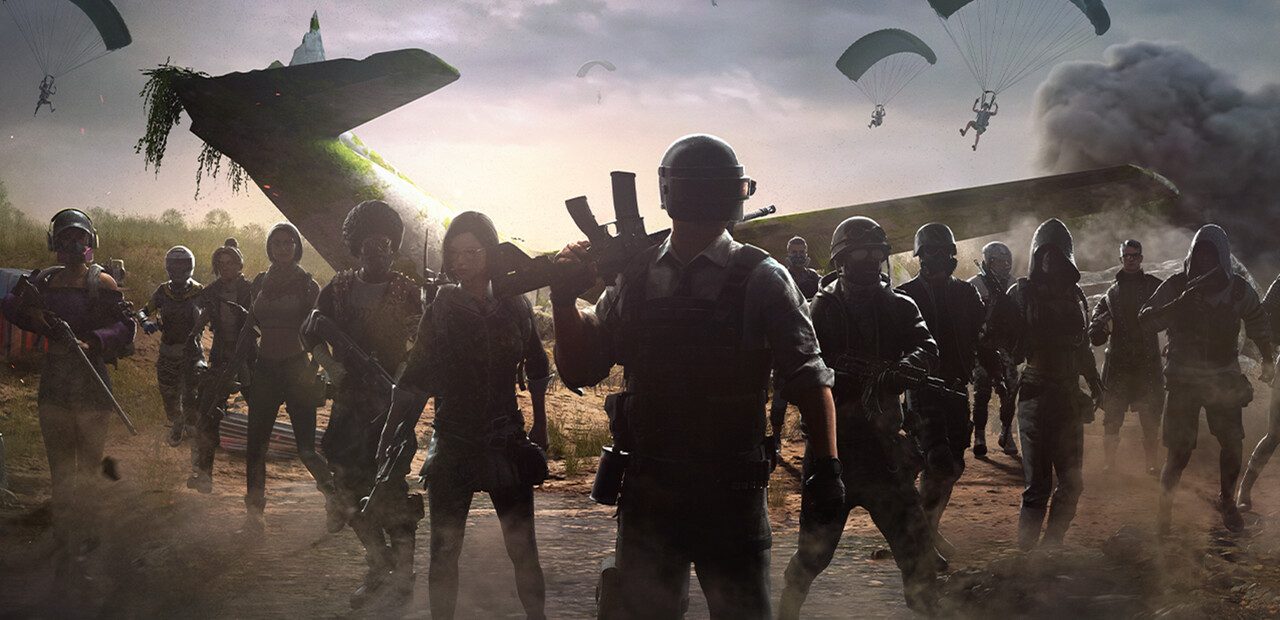
Krafton’s new PUBG project, PUBG: Ded.Net, is being built as a third-person battle royale shooter with a roguelite layer that carries power-ups and injuries across consecutive matches, according to a Gamescom preview interview with creative director Dave Curd. The game is in development at PUBG Madison in Wisconsin and is listed as coming to PC via Steam, PlayStation 5 and Xbox Series X/S, with availability still marked TBC.
The pitch is deliberately stranger than the original PUBG, but Curd said the team is still aiming at the same core feeling that made the 2017 game such a force. In the interview, he described PUBG less as a collection of items and systems than a set of pressures: “I think [it’s] desperate survival. I think it’s survival of the fittest, it’s dog eat dog.”
Krafton announced the new PUBG project last month, and Ded.Net is the first public look at how the studio wants to distinguish it from the battle royale template that PUBG helped define. Rather than simply recreating the old formula, PUBG Madison is pushing the concept into a pulpy, hyperviolent gameshow setting with a roguelite twist that can alter later matches based on the choices made in earlier ones.
A battle royale built around carry-over consequences
At its base, Ded.Net still follows the familiar battle royale structure. Players are dropped into a map, the safe area shrinks, and everyone competes for gear until one squad or survivor remains. The difference comes from what the game does after each round. Instead of treating every match as a clean reset, Ded.Net uses a pick-three-style roguelite system, where players choose from three upgrade options and those selections can affect future matches.
That means the game can reward a player for leaning into a particular fantasy while also saddling them with drawbacks. Curd gave one example in which a player who replaces their arms with giant blades in one match may later see melee-focused power-ups, but also pick up injuries that change how they play. Those injuries can create practical problems, such as occasionally failing to reload or finding it harder to swim.
Curd said the structure is intended to soften the blow of a bad round. Instead of ending a session on a losing streak and logging off frustrated, players may leave a match thinking about what wild option could appear next. He said the design lets a player still get “wrecked” in-game while staying invested in the out-of-game progression, because a tempting ability might show up and encourage one more attempt.
The studio’s aim is not to make every run a mathematical exercise either. Curd said he does not want players weighing tiny percentage boosts or doing spreadsheet-level optimisation. The powers in Ded.Net are meant to be more dramatic and more readable than the incremental stat bumps often associated with roguelites.
Ultra-violence, dolls and hacked trucks
Ded.Net’s tone is markedly more absurd than military simulation, with the game framed as an “uber violent gameshow” that riffs on pulpy 1990s action and violent media. That attitude is visible in several of the abilities Curd described.
- Players can gain sword arms by slamming limbs into a twisted pinball machine, but that comes at the cost of being unable to shoot guns for the rest of the match.
- Characters can become porcelain, Chucky-like dolls that jump onto allies’ backs to ride along, or onto enemies to steal items while chittering and giggling.
- Multiple doll players can appear in the same match, and if an ally doll and enemy doll are both attached to the same player, the game has a bespoke doll fighting system.
- Some objects can be hacked for sabotage, including a truck that can be set to explode after a delay.
- Vehicles also feature a seatbelt system, so players can be flung through the window if they crash without buckling up.
Curd said the development team has tried to make those ideas feel like part of the game rather than throwaway jokes. He said the team evaluates features by asking whether they are funny, whether they present an intriguing fantasy and whether they linger in the mind the next day. If the answer is yes, the idea usually gets tested.
That approach ties into the project’s broader identity. Rather than trying to outdo other battle royales with realism or an exact clone of PUBG’s original military tone, Ded.Net appears to be leaning into spectacle and surprise. Curd said the team wants players to smile, and that the fun should come from moments that feel memorable as they happen and afterwards.
Taking PUBG in a different direction
Curd framed Ded.Net as a response to the way the battle royale genre has matured. The biggest games have already found their lane, he said, leaving room for developers willing to push in new directions. He described that as an “evolve or die” situation and said Krafton sees the shift as an opportunity rather than a threat.
He also stressed that the team does not see itself as working under crushing pressure despite the weight of the PUBG name. According to Curd, the executive producer has encouraged the studio to ignore the numbers and focus on making something memorable for fans. He said the company has supported the project and has been open to “big swings.”
This is not the only PUBG story making headlines inside the wider competitive scene this year. GAMER2GO previously covered Krafton’s PGS Circuit 4 announcement as the road to PGC 2026 entered its final stretch, while another report tracked the PUBG: Battlegrounds PAS2 Finals 2 Day 1 with PGC points on the line. That earlier circuit update focused on the esports path; Ded.Net shows Krafton also wants the brand to branch into a different kind of multiplayer play.
Curd said the studio is building the game “with the fans” and has been doing so incrementally with a lean team. For now, Ded.Net remains a work in progress rather than a finished product, but the outline is clear: a PUBG spin-off where battle royale rules still apply, only now the winners may leave with sword arms, doll bodies, hacked trucks and injuries that change the next match before it even starts.
the carry-over injuries are the part that jumps out to me most. failing to reload sometimes or getting worse at swimming sounds way nastier than just losing a match, because it changes how you approach the next drop too. sword arms and doll bodies are wild, but that consequence stuff is what makes it feel less like a normal gimmick and more like a real roguelite loop
do you lot think the injuries will actually be fun, or just annoying after a few games? i’m curious if the carry-over stuff sounds like good pressure or just anti-queue material
annoying, probably
fun if they stay readable. if i lose because of one bad reload jam, that is fine, but if it becomes random pain every match, no thanks.